The Moral Dilemma of Man
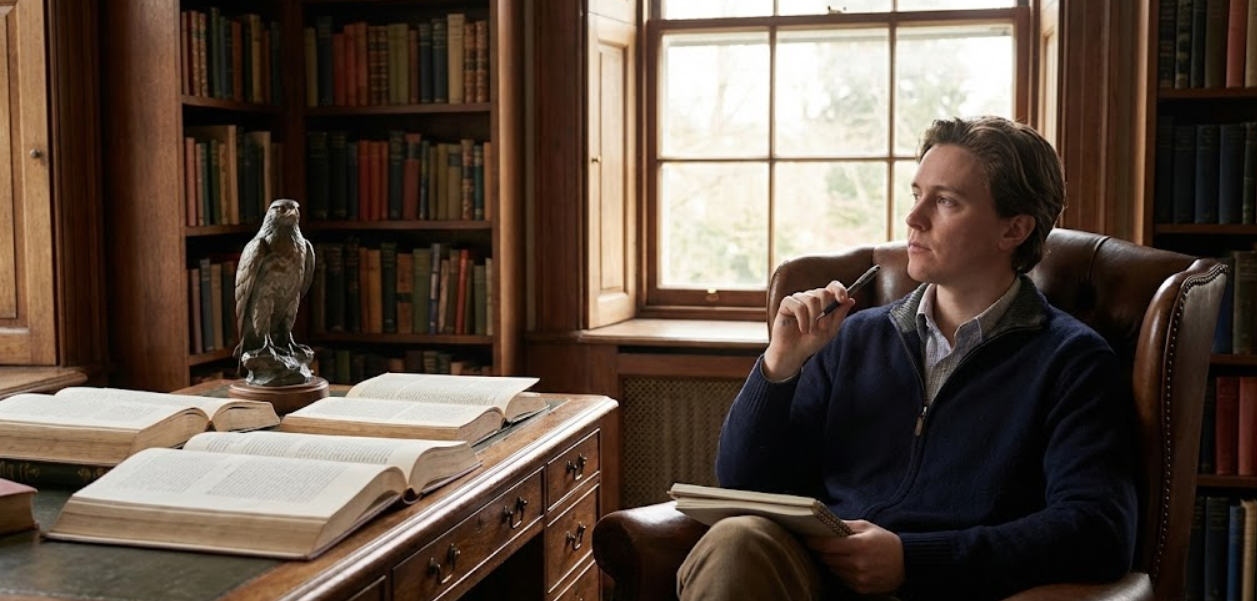
I sat quietly, watching the trees sway as the wind passed through them without intention or purpose. Beneath the window, a cat lay still, its body relaxed but its mind alert. On the other side of the glass, a lizard appeared. The cat waited, calculated, patient, restrained only by the invisible barrier between instinct and action. It could not reach its prey, yet it could not look away.
At that moment, I wondered: how different are humans from this creature? Are we truly rational, or do we merely place reason on top of instinct and call it choice?
Soon after, my attention shifted to the street below, where a woman walked past holding a baby. The contrast struck me deeply. That fragile life in her arms depended entirely on another being for survival. A child is not merely born into the world—it is entrusted to someone. It becomes a moral responsibility rather than a biological event.
We often speak of children as sources of happiness, as extensions of love, as meaning itself. But happiness is fleeting, and meaning is fragile. A child brings joy, yes but also exhaustion, sacrifice, fear, and surrender. To raise a child is to give away your peace of mind willingly, to trade sleep for vigilance, freedom for obligation, and certainty for hope.
Is such a sacrifice noble, or is it merely tradition disguised as virtue?
A parent gives decades of life, immense wealth, and emotional labor to a being who may grow indifferent, selfish, or distant. Love, in this sense, becomes an investment without guaranteed return. Is it moral to demand gratitude from a life that never asked to exist? Or is it equally immoral to create life knowing it will suffer, struggle, and eventually face death?
The world is vast, yet our lives are short. There are cultures to experience, ideas to explore, skies beyond this planet. Should one dedicate existence to nurturing another, or to understanding oneself? Is fulfillment found in continuation, or in consciousness?
Nature offers no hesitation. Animals reproduce because they must. A peacock displays its feathers. A lion dominates. The species continues without reflection. But humans are cursed or gifted with awareness. We are not driven solely by instinct; we question it. If reason separates us from animals, must we obey the same biological script? Or does rationality demand that we pause, reconsider, and perhaps choose differently? Society teaches us that purpose lies in partnership, reproduction, and legacy. But is legacy measured in bloodlines, or in thought? Is it enough to be satisfied with one person for an entire lifetime? Or are we bound by moral obligations created by society rather than nature? I do not claim to have answers. Philosophy rarely provides them. But the weight of these questions lingers quietly, persistently like the cat staring through the glass, aware of desire, restrained by understanding.
And perhaps that tension, the space between instinct and reflection is what it truly means to be human.
No comments yet
Sign in to leave a comment.