The weight of an autumn breeze
Today is October, and early this morning when I went to the park for a run, I felt the cool autumn breeze hugging me, just as if Mother Nature were bestowing a gentle blessing upon me. I could see the golden hour illuminating the blue sky, patches of clouds drifting by, and a crescent moon clearly visible like a beautiful bindi that Mother Nature was wearing on her forehead. The trees had begun shedding their old leaves, preparing for a new beginning. Those falling leaves flew around me, almost feeling like they were welcoming me and encouraging me to go the extra mile. After the run, while I was drinking water, I realized why everything felt so deeply familiar today. It is because it is that time of the year. It is Dashain time.
Unless you are from Nepal, you might not know what Dashain is. Dashain is a glorious 15 days long festival in Nepal, traditionally celebrated to mark the victory of good over evil, ending with elders giving their blessings to the younger generation. It is much like Christmas here in the United States—a precious time of gathering, warmth, and reuniting with family members.
When I think about Dashain, the very first thing that comes to my mind is the exact image I saw today: the light breeze, the sunny sky, and the crisp, distinct smell of autumn. In Nepal, the period from June to almost mid-September is the monsoon season. It is characterized by heavy rainfall every day, making it hard to even catch a glimpse of the sun's face. The sky is almost always overcast with dark, gloomy clouds. I used to hate going to school on those days. I vividly remember walking with an umbrella in my hand, navigating roads that would sometimes flood. If I mistakenly submerged my foot in a muddy puddle, I would return home from school with my white socks and legs completely soaked.
During our tiffin (lunch) break, when we normally used to play soccer, Ice and Water or the IT game, we would just stare through the windows of our classroom at the slimy ground outside. It would turn almost green due to algae, with most areas thickly covered by wild weeds. Even if it wasn't raining and we tried to play a game, there was a high chance we would slip and fall on the wet ground, covering our school uniforms in dirt. When I was a child up to class 2, it didn’t matter much. But after that, it started to feel awkward to walk around with dirty, wet pants. I would feel shy walking past the girls with my clothes ruined, so I eventually stopped playing any games during the tiffin break altogether. At home, too, the heavy rainfall allowed shrubs and weeds to grow wildly, making it hard to play any outdoor games. One major danger was the snakes lurking around in the tall grass. Trust me, I have had so many terrifying encounters with snakes that I am still genuinely scared of them today. Because of that fear, I would not dare go near the grassy areas to play. So, from June to September, it felt like a time when I had absolutely no freedom, stuck inside during the hot and humid weather.
Turning to Dashain time, it was the complete opposite. The sun finally started to show its presence again, the sky turned a brilliant blue, and the weather became slightly colder and much more welcoming. As a native of Kathmandu, the weather was always moderate, but the fall season there is absolutely perfect. The heavy monsoon rains did have one benefit, though: they allowed a massive number of vegetables to grow. I remember the garden near our house used to be covered with tall corn plants, lush bushes of soybeans, and, most importantly, the whole area would be taken over by thick, winding vines of cucumbers, bottle gourds, bitter gourds, sponge gourds, and various kinds of beans. I used to imagine that my garden was just like the Amazon tropical rainforest. Well, it was certainly good to have my mom make fresh cucumber pickles every day, but I hated the darkness the overgrown foliage created around our home, especially with the already limited sunlight. But then came the best part of the changing season: the majestic mountain range that I could see from my home. On the northern side, when Dashain arrived, the skies cleared, and the magnificent silver-white snow-capped mountains became visible once again. Looking at them almost made me feel like I was in heaven.
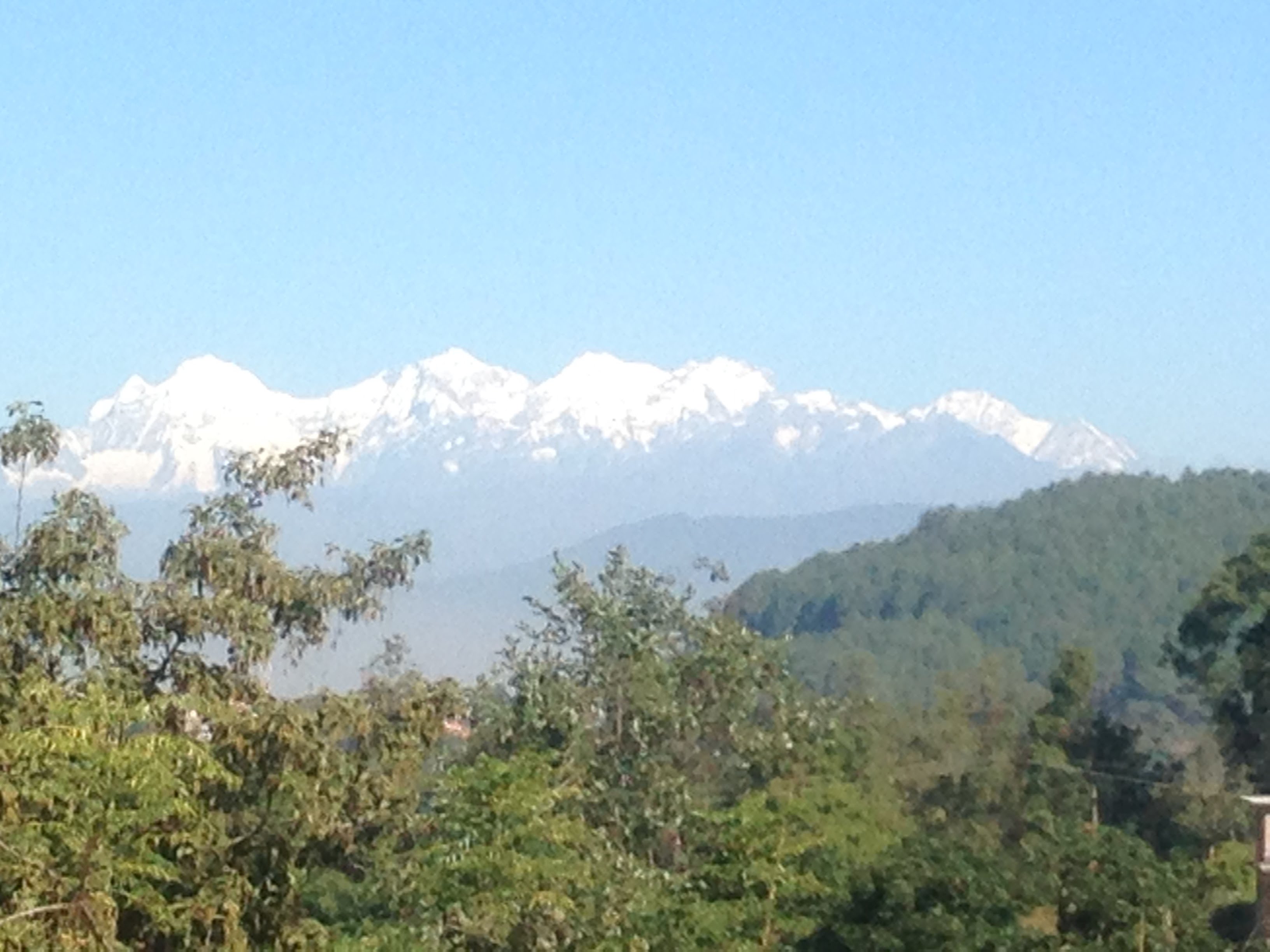 Image: Mountain range seen from my home, Oct 2014
While Nepal has a lot of festivals and numerous holidays, Dashain brought a massive 15-day vacation. Since it had already been six months since the school year started, this was a desperately needed break for me. Just before Dashain, we always had our midterm exams. Because of this, the upcoming Dashain vacation truly felt like the ultimate freedom. During the week before the vacation started, my mother would constantly tell me to read and study for the exams. I still remember walking back from school on a sunny day, filled with joy, knowing that vacation time had finally arrived. The last day of the exams was always a mix of fun and emotion, as we used to exchange postcards with our friends. Back when I was younger, writing on a postcard was the most common and heartfelt way to express friendship. It was nothing fancy just a small rectangular piece of paper, usually featuring a photo of a beautiful place or a mountain, with "Happy Vijaya Dashami" written on the back. That was all it took, and somehow, it turned out to be one of the most beautiful expressions of friendship in the world. I cannot fully explain the sheer pleasure of having that newfound freedom: the realization that I wouldn't be scolded for watching TV or going to my neighbor’s house. I had the freedom to play outside again because the wild grass would start to dry up on the grounds, meaning there were no longer snakes lurking around.
Dashain is also the time when everyone in our village gets busy harvesting their rice fields. On the next hill over, we had our own family rice field, and it was time to harvest those beautiful golden crops. As a child, I remember carrying a thermos of hot, sweet tea, walking down the hill, crossing the flowing river, and then climbing up the next hill to our field where people were busy cutting the rice. One of the most familiar sounds of that season was the rhythmic thumping of the traditional rice harvesting machine. Typically, a man would pedal or kick the machine with his legs while holding the bundles of rice plants against it to separate and collect the precious grains. It was the quintessential, familiar picture of that period. The best part was that the overgrown monsoon vegetables would start to die off around this time, and by Dashain, we would have completely cleaned our garden near the house. Everything felt so clear, open, and beautiful again. Not to mention the bright orange and yellow marigolds blooming absolutely everywhere. I used to pluck the fully bloomed marigolds and collect them in a dalo (a medium-sized traditional basket made of bamboo). Later, my mother would string them together to make beautiful garlands to decorate the doors of our home and to offer to the goddess. In Nepal, Dashain had a magical, magnetic effect. When I was younger, hardly anyone went abroad, and even if they had, they would make sure to return during Dashain. It was truly the ultimate time for family gatherings.
The very first day of the festival is called Ghatasthapana, which marks the official beginning of Dashain. On this day, a clay pot is filled with sand and soil, and barley and maize seeds are sown in it. For the next nine days, these seeds are carefully watered and worshipped, carrying the belief that they manifest positive energy, growth, happiness, and togetherness in the family. Right from that first day, the grand cleaning of the house would begin. Thinking about this cleanliness brings back memories of our old house, which was sadly destroyed by the devastating 2015 earthquake. You can hardly see houses like that in Nepal anymore. It was made of mud and wood instead of cement. The color we used for the exterior was a natural red soil. I remember collecting the red mud and mixing it with water to make a thick paste so we could freshly paint our home. For the indoors, we used different natural colors. I do not remember the exact names of the pigments, but we used to mix them with water to create a paste and paint the interior walls. It was a time of deep purification; we would clean the entire house, take all the old clothes, mattresses, and carpets, and soak them in the warm autumn sun. My mother would bundle up all the heavy clothes and take them to the nearby river to wash them spotless.
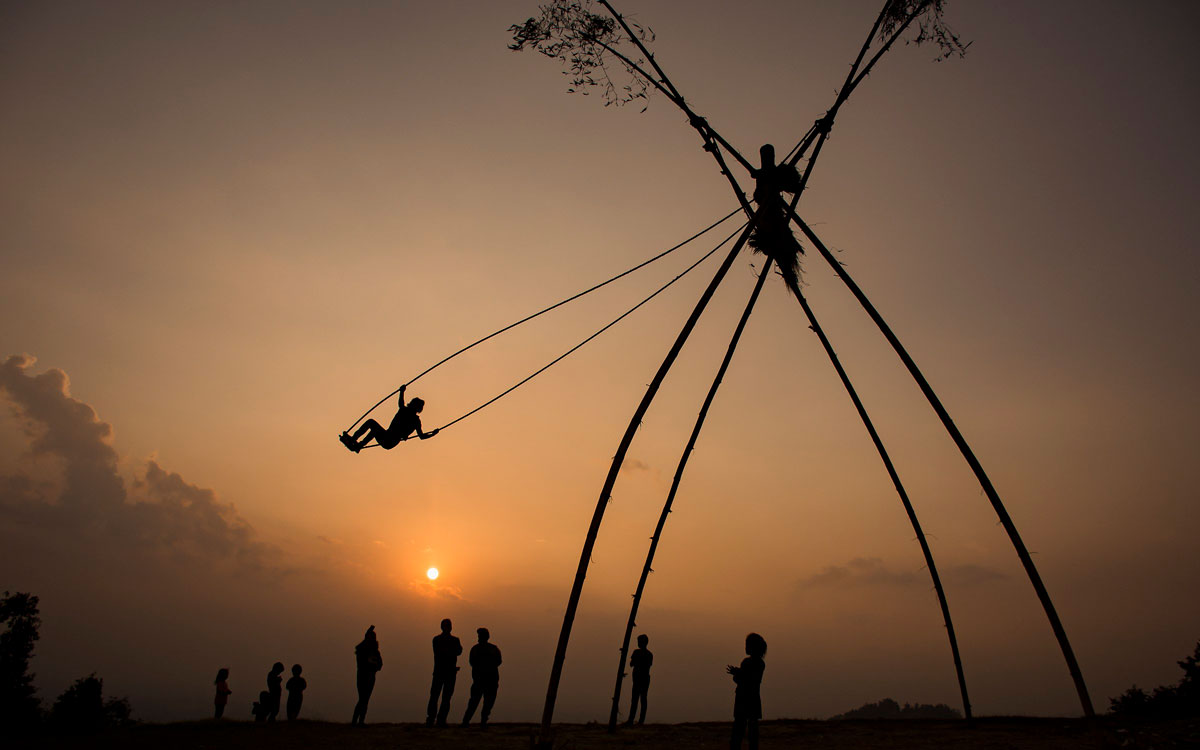
One of the most fun parts of the festival was the swing (ping). In the villages, and even in most parts of Nepal unless you are extremely wealthy-it is unlikely to have a permanent swing at your house. However, there is a cultural belief that you must leave the earth at least once a year during Dashain, so everyone would line up to play on the communal swings. These weren't ordinary swings; they were massive structures built high out of sturdy bamboo. I remember excitedly lining up with the other kids just to get my turn. The sky above wasn't just a clear blue; it would be completely dotted with colorful kites. I remember running around the empty harvested fields, pulling the string to make my kite fly high. There would be fierce kite-fighting competitions in the sky, and soon, defeated kites would end up trapped in the branches of tall trees. It was a beautiful, carefree part of childhood. Just like the kites had the freedom to fly high across the skies, we finally had our freedom during Dashain. I was never very good at flying kites. I tried a lot, but rarely succeeded. Still, it was satisfying enough just to lay back on the green grass, stare up at the vast blue sky, and watch the kites being flown by my friends and seniors. There was a unique beauty to returning home just as the sun was setting, casting a golden glow over the white-capped mountains.
Dashain used to give us a completely different kind of energy. I remember when I was barely 10 or 11 years old, my cousin and I used to wake up at 4:30 in the morning and walk in the crisp air to the Bajrabarahi temple. Some days, we wouldn't even enter inside; we would just walk around it, look at the goddess from the outside, ring the temple bells, and keep going. From there, we would head to the Santaneshor Mahadev temple, climbing almost 400 stone steps to reach the top. While climbing, we would race each other to the summit, wander around the peaceful grounds, ring the temple bells again, and stand there watching the breathtaking view of the Kathmandu Valley and the distant lakes. Coming back home each day meant we had walked almost 8 to 10 kilometers, yet we never felt tired. We were fueled by the pure, festive energy of the season.
And who doesn't love shopping? Dashain is famous for buying new clothes and belongings. Getting new clothes was one of my primary reasons for loving the festival. I remember going out to the bustling market with my cousins, eagerly hopping from shop to shop to find the perfect new clothes and shoes. Almost every street and market was packed with people. In those days, buying new clothes was a luxury that happened almost exclusively once a year. This was the day to go shopping, so you can imagine how much Dashain meant to my younger self.
The seventh day of Dashain is called Phulpati (meaning flowers and leaves), marking a shift into the main, most vibrant days of the festival. People collect sacred plants tied together—banana plant stalks, pomegranate, rice stalks, manabriksha, turmeric, ginger, wood apple (Indian Bel), Ashoka plant, and Jayanti plant—each representing nine different forms of the goddess. Bringing these into the home is believed to invite health, wealth, and prosperity. It also represents a massive homecoming, prompting people traveling from cities or abroad to return to their ancestral hometowns, reunite with family, and prepare to receive their elders' blessings. Right at the auspicious time of bringing the Phulpati inside, the Nepal Army performs a grand parade and a formal feu de joie gun salute to mark the occasion. We would wait patiently at home listening for the sounds before bringing the sacred plants inside.
Another incredibly beautiful part of the festival is the music itself. Dashain has its own distinct traditional melody called the Malshree Dhun, performed with classical instruments like the sitar, tabla, taa, dhimay, sarangi, and bansuri (flute). Hearing that tune instantly signals that Dashain has arrived.
The eighth and ninth days (Maha Ashtami and Maha Navami) are when weapons, tools, and vehicles are worshipped. I remember my uncle carefully washing and worshipping his motorbike. Today, it might not seem highly significant, but on a deeper level, it reflects the practice of being grateful for the objects and non-living things that make our daily lives easier. Servicing and cleaning the vehicles is obviously the practical priority, but having a dedicated day to bless and appreciate them is a beautiful idea. The eighth and ninth days also mark the time when goats are traditionally sacrificed. In fact, one of the main reasons I do not eat meat today stems from this day. I saw a goat being slaughtered right in front of my eyes when I was just four years old. While I felt emotionally connected to those goats and felt deeply sorry for them, the biggest joy for many people—at least in the past—was this exact day. Meat was always expensive in Nepal, and though things have changed a lot now, back when I was young, people would sometimes go months without eating meat. Dashain was the time when a goat was slaughtered, meaning families finally had plenty of rich meat to eat, and the festival was famous for these grand feasts.
The tenth day, Vijaya Dashami, is the pinnacle of the festival when we receive tika and blessings. Elders apply a special tika—a vibrant mixture of red vermilion powder, yogurt, and rice grains—on the foreheads of younger family members. Along with this, sprigs of jamara (the yellow barley or maize shoots sown on the first day) are tucked neatly behind our ears, and the elders offer profound blessings for prosperity, a long life, and success. It was the day I would finally wear my brand-new clothes, and our entire extended family would gather in one room to take blessings. I was the youngest one in our family, so absolutely everyone had to give me blessings. By the time it was over, I would have a massive, thick patch of red tika on my forehead—so big that it actually felt heavy!
After the tika ceremony came the ultimate feast. We would prepare and eat rich foods that we didn't get to have on ordinary days; my family would prepare almost 7 or 8 different, delicious dishes. I know Nepali society is still largely patriarchal, and historically it has been that way, but one of the beautiful things about Dashain and our culture is that women especially young girls are given immense importance during this time. The festival itself is dedicated to the Goddess Durga, who is portrayed as the ultimate source of power, protection, and care. Similarly, during the tenth day, young women and girls are traditionally given money (known as Dakshina) along with their blessings as a token of love, respect, and good fortune. Traditionally, only girls were supposed to receive this money while men just received blessings, but my family loved me so much that they used to give me Dakshina anyway. I also remember that the Nepal Rastra Bank prints crisp, new money every year specifically for Dashain. Holding those brand-new, stiff notes was incredibly exciting. Right after eating the grand meal, my immediate job was to sit in a corner and count my Dakshina. Since I was the youngest, it was almost certain that I would collect the highest amount among all my family members. When I was a child, having that sum of money felt like the biggest achievement in the world.
The celebrations weren't just limited to our immediate household. We used to spend the next five days visiting all our relatives, traveling to my maternal uncle's house and beyond, while other relatives would visit us for the same tika and blessings. Also, starting on the 10th day, our uncles used to allow us to play cards—a special privilege granted just for those few festive days. I used to proudly use my Dakshina money to place bets in our friendly card games. We would sit out in the warm autumn sun, playing cards for hours, all while sipping on bottles of Coke that we rarely ever bought for the house otherwise. So, to me as a child, Dashain was the ultimate embodiment of family gatherings, eating delicious food, wearing new clothes, collecting money, and feeling absolute freedom.
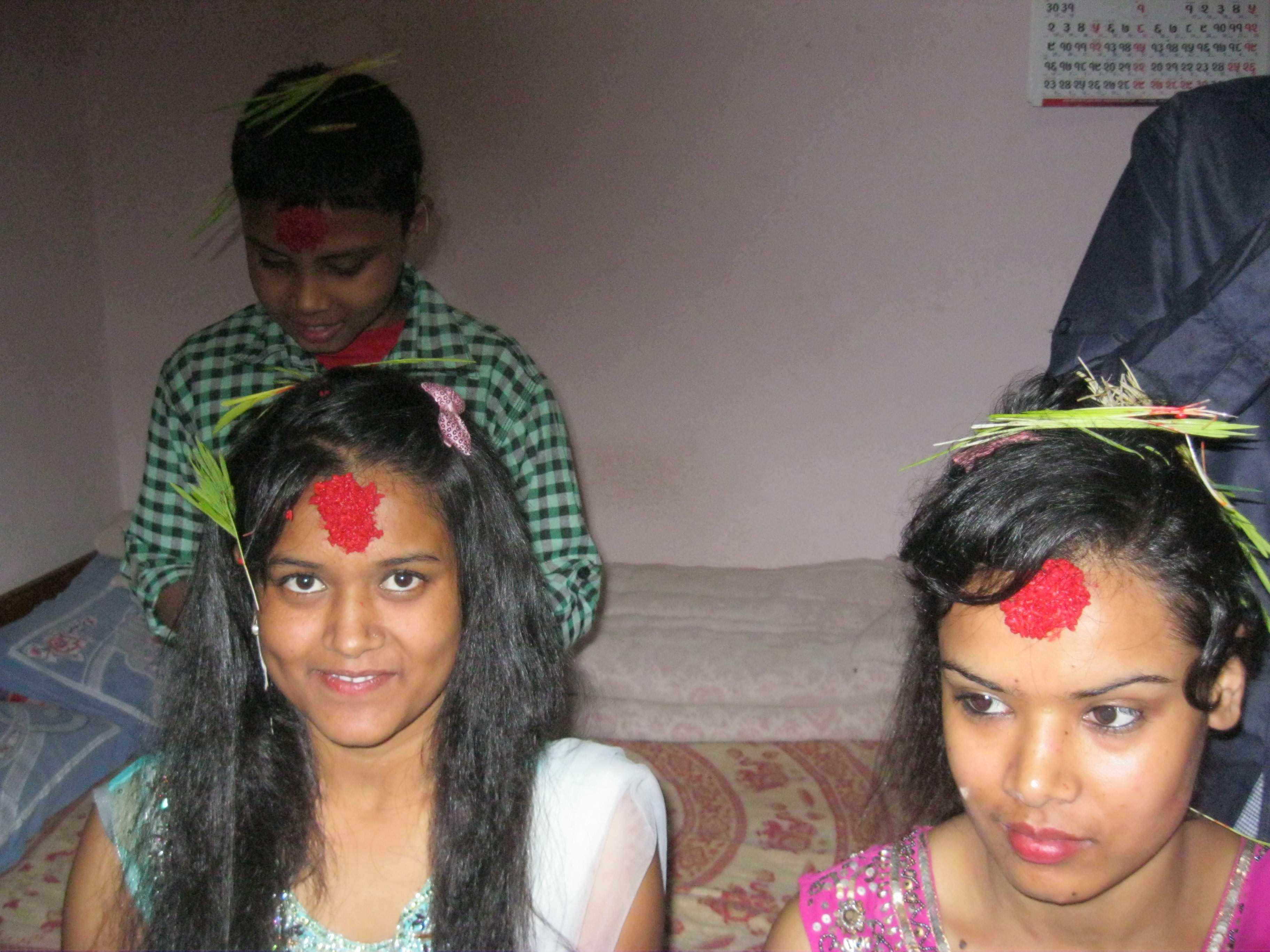 Image: Me counting my Dakshina, Dashain 2012
Coming back to today...
The autumn weather here feels exactly the same, but I am no longer that little kid, and I am in a completely different part of the world. I am so deeply carried away by adult responsibilities and daily life that the sacred day of Phulpati can no longer physically call me home. "Home" takes on a much broader meaning now. When I was in college here in the US, midterm exams usually clashed with the festival, so it wasn't always a grand celebration. Yet, during my first semester, I remember we organized a Dashain event; I recited a poem and even danced on stage. While celebrating Dashain in the USA is vastly different from the magical days in Nepal—especially the ones from my childhood—we still did our absolute best to keep the memories alive despite the stress of midterms.
Now, fully immersed in professional work life, it took a simple autumn breeze to remind me that it is Dashain at all. It makes me realize that life is ultimately about moving forward, but moving forward comes with quiet, bittersweet changes. I no longer need to wait an entire year to buy new clothes; if I want something, I can just drive to the mall, or better yet, buy it online with a single click. I used to love the exhausting thrill of going from shop to shop in the crowded market to find the perfect outfit, but now, the desire to do that is completely gone. I used to wait 365 days to collect Dakshina money so I could carefully save it or buy that one special toy. I am grown now. I don’t have to wait for the things I like; I can simply afford them.
The thrill of waiting in long lines just to fly on a bamboo swing is a thing of the past. I can look up and see the exact same blue sky I saw in Kathmandu, but I don't see a single kite fighting in the wind. Last year, I was at Harvard on Dashain day; this year, I will be sitting at my desk in the office.
Am I growing old? Maybe. But more accurately, I am growing up. The magic of my childhood Dashain was deeply rooted in anticipation—enduring the heavy, restrictive monsoons and long school days just to earn those 15 days of perfect, unadulterated freedom. Having everything at my fingertips today is a privilege, but it also means things are rarely as magical as they were when they were scarce. Things have changed immensely. I am not a kid anymore. Yet, as that cool morning breeze hugged me today, I smiled knowing that while I may be miles away from the golden rice fields and the red mud house, the spirit, the energy, and the beautiful memories of Dashain will always live within me.
No comments yet
Sign in to leave a comment.